
Many people choose semi-permanent makeup to enhance their natural features and simplify their daily routine. When performed well, treatments such as eyebrow tattooing, lip blush, and eyeliner enhancement can create beautiful, long-lasting results.
However, semi-permanent makeup does not always age as expected. Pigments can fade or change colour over time, trends evolve, and techniques that once looked flattering may no longer suit your preferences. In clinic, we often see patients who are not looking for complete removal, but instead want to soften previous work, correct unwanted colour changes, or create a better foundation for new treatment.
At Dr Kate Aesthetics we are pleased to introduce professional semi-permanent makeup removal using the Hanafy Saline and Chemical Removal System. Whether your goal is complete removal, colour correction, or preparing for a fresh set of brows, understanding the available options is the first step towards achieving a result you feel confident with.
Why Do People Choose Semi-Permanent Makeup Removal?
Semi-permanent makeup removal is not always about correction, it is about creating new possibilities.
As techniques evolve and softer, more natural-looking results become increasingly popular, many patients choose to lighten or remove existing pigment before refreshing their brows, lips, or eyeliner.
Common reasons for removal or correction include:
- Brows that have faded to unwanted grey, blue, red, or orange tones
- Lip blush colour that no longer suits their preferences
- Overly saturated pigment
- Older techniques that would benefit from a more modern refresh
- Preparing for new semi-permanent makeup or colour correction
In clinic, we often see patients who were happy with their original treatment but feel their style has changed over time. Removal or lightening can create a clean foundation for a fresh result that better reflects their current goals.
What Is Hanafy Saline and Chemical Removal?
Hanafy is a globally recognised name within the permanent makeup industry and has developed advanced systems specifically designed to remove unwanted pigment safely and effectively.
At Dr Kate Aesthetics, we offer both Hanafy Saline Removal and Hanafy Chemical Removal, allowing us to tailor treatment according to the individual patient, the type of pigment present, and the desired outcome.
This flexibility is important because no two semi-permanent makeup cases are identical. The colour, depth, density, age of the pigment, and the area being treated all influence the most appropriate removal approach.
What Can Hanafy Removal Treat?
Hanafy removal treatments can be used to address a wide range of concerns, including:
Semi-Permanent Eyebrows
Brows remain one of the most common treatment areas for removal and correction.
This may include:
- Microblading
- Ombre brows
- Powder brows
- Combination brows
- Traditional eyebrow tattooing
Lip Blush and Lip Neutralisation
Patients may seek removal due to colour changes, uneven healing, oversaturation, or simply because their preferences have changed over time.
Eyeliner and Lash Enhancement Tattoos
Removal can be performed carefully in this delicate area when appropriate and following thorough assessment.
Colour Correction Cases
In some situations, partial removal may be recommended before correction rather than attempting to camouflage undesirable pigment.
Hanafy Saline vs Chemical Removal: What’s the Difference?
No two semi-permanent makeup correction journeys are the same. Hanafy Saline Removal offers a gentle, progressive approach to pigment reduction, while Hanafy Chemical Removal may be recommended for more deeply implanted or heavily saturated pigment. Following a detailed assessment, we can determine which method is best suited to achieving your desired result while prioritising the health and integrity of your skin.
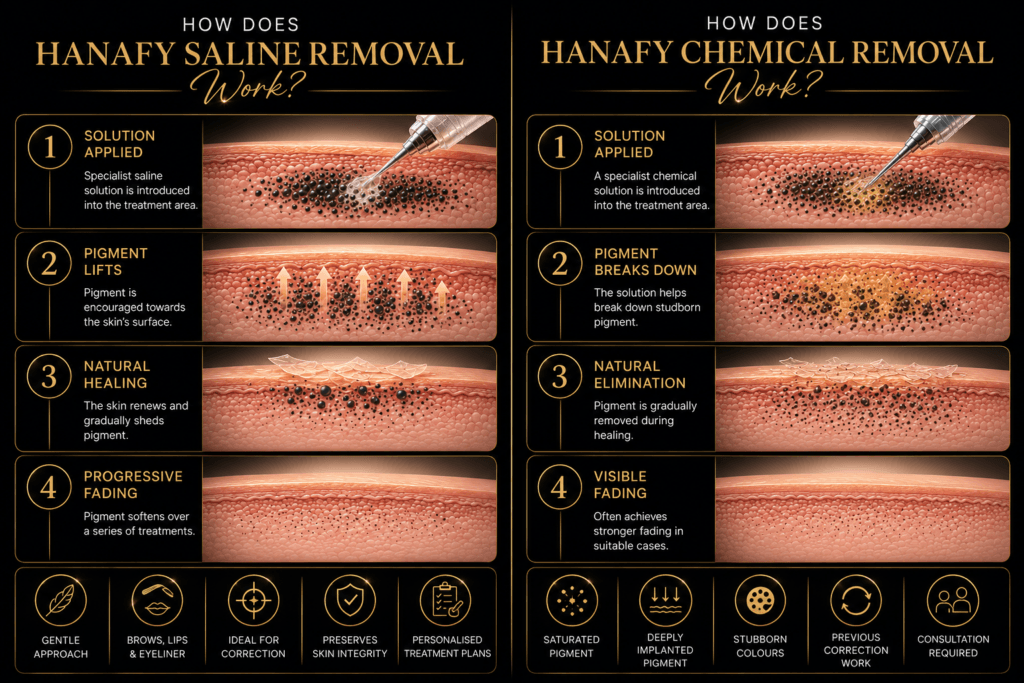
What Is Recovery Like After PMU Removal?
Recovery varies depending on the treatment area, removal method, and individual healing response. Patients can expect:
- Temporary redness
- Mild swelling
- Formation of a protective scab during healing
- Gradual fading over the following weeks
Following aftercare instructions carefully is essential for achieving the best outcome and protecting skin health throughout the healing process.
As with semi-permanent makeup itself, patience is important. Pigment removal is a process rather than an instant transformation.
How Many Sessions Will I Need?
This is one of the most common questions we receive. Several factors influence treatment requirements, including:
- How long the pigment has been present
- The type of pigment used
- Pigment depth
- Pigment saturation
- Skin type
- Healing response
Some patients achieve their desired outcome after relatively few sessions. Others, particularly those with older, heavily saturated, or repeatedly corrected pigment, may require a longer treatment journey. During your consultation, Gemma will discuss realistic expectations and develop a personalised treatment plan based on your specific circumstances.
Why Professional Removal Matters
Semi-permanent makeup removal should never be approached as a simple cosmetic procedure. The skin around the brows, eyes, and lips is delicate, and treatment decisions can significantly impact both healing and future correction options.
Professional assessment helps determine:
- Whether removal is appropriate
- Which removal method is likely to be most effective
- Whether partial removal may be preferable to complete removal
- When correction can safely be performed
- How to achieve the most aesthetically pleasing long-term result
This is where experience becomes invaluable. The objective is not simply to remove pigment. It is to create the best possible foundation for whatever comes next.
Frequently Asked Questions
Does Hanafy removal completely remove semi-permanent makeup?
In many cases, significant fading can be achieved. However, complete removal cannot always be guaranteed as results depend on pigment type, depth, and individual healing factors.
Is saline or chemical removal better?
Neither method is universally better. The most suitable option depends on the characteristics of the pigment and the treatment goals.
Can I have removal before getting new brows?
Yes. In fact, many correction cases benefit from partial or complete pigment removal before new semi-permanent makeup is performed.
Is PMU removal painful?
Most patients describe the treatment as manageable. Sensitivity varies depending on the area being treated and individual tolerance.
How long should I wait between sessions?
This varies depending on healing progress and treatment response. Your personalised treatment plan will outline appropriate treatment intervals.
Can old microblading be removed?
Yes. Hanafy removal can often be used to lighten or remove old microblading, depending on the pigment and skin condition.
Thinking About Correcting Previous Semi-Permanent Makeup?
If you have semi-permanent makeup that no longer reflects your style, has changed colour over time, or is preventing you from achieving the look you want, a professional consultation can help determine the most appropriate next step.
At Dr Kate Aesthetics in North London, we offer Hanafy Saline and Chemical Removal treatments alongside semi-permanent makeup services, allowing patients to benefit from a complete correction and restoration pathway. Whether your goal is subtle pigment reduction, complete removal, or preparing for a fresh treatment, we can create a personalised plan tailored to your individual needs.
Book your consultation today and take the first step towards achieving results you feel confident wearing every day.


